
- Full implementation of the mandates enunciated in the September 2022 UNHRC resolution A/HRC/RES/51/1
- OSLAP findings to strengthen the call for an international criminal justice mechanism.
- OSLAP is mandated to develop possible strategies for future accountability processes for gross violations of human rights or serious violations of international humanitarian law in Sri Lanka.
- OSLAP is mandated to advocate for victims and survivors, and to support relevant judicial and other proceedings.
- No restriction for the evidence collection time zone
- The SLAP files are to be used in the member states and in the international judicial mechanisms.
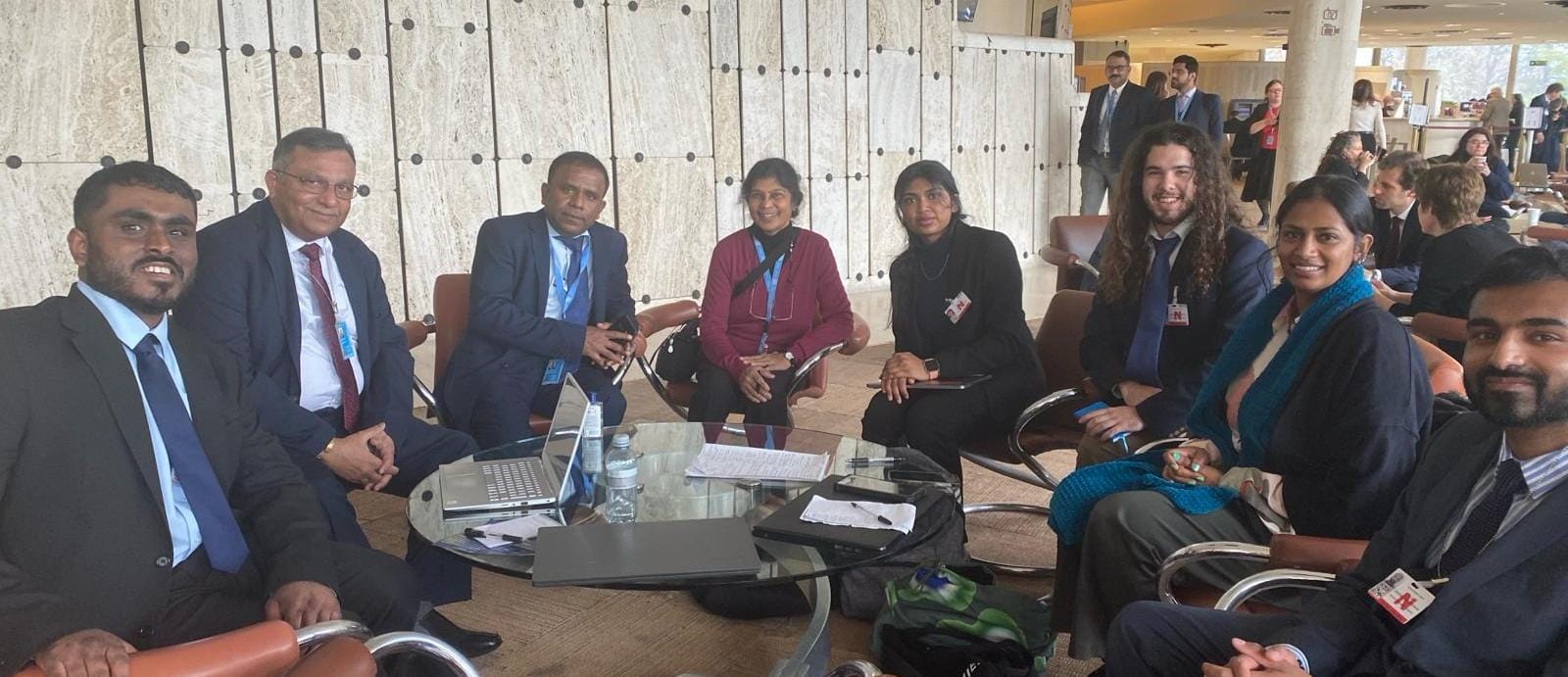
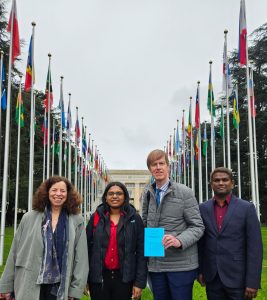
The British Tamils Forum (BTF), continued to concentrate on key strategic initiatives during the current 55th United Nations Human Rights Council Session (UNHRC).
A number of Nation States at the Council, including those in the Core Group such as the UK wanted a rollover resolution on Sri Lanka, that BTF and sister organisations from USA, Canada, EU and Australia, successfully engaged the voting member States of the UNHRC in March 2021 for passing a new resolution. By persevering and reiterating the crucial need for a mechanism, similar to Syria (IIIM), and Myanmar (IIMM), the evidence collection mechanism, Sri Lanka Accountability Project (OSLAP), was created within the UNHRC mandate under the OHCHR. Unlike the UN Panel of Experts (UN POE) in 2010 – 2011 or OISL in 2014 – 2015 the current evidence collection process requires a criminal prosecution standard to build a repository for future judicial processes.
While the SLAP was set up within the UNHRC with very limited resources, BTF insisted that the time-bar as defined by the LLRC (The investigation period covered by the LLRC was from 21 February 2002 until 15 November 2011, when it presented its report to the President of Sri Lanka.) must be extended into the current resolution to probe the genocidal intended crimes, war crimes and crimes against humanity from beyond the last phase of the “Mullivaikkal” war. There were over 158 massacres perpetrated against Tamils by the Sri Lankan state between 1956 and 2008 recorded in the NESOHR publication.
As a result, the LLRC period time bar was removed in UNHRC Resolution 46/1 in March 2021. This notably opened a substantial window of evidence collection opportunity to gather evidence of the acts of barbarity by the Sri Lankan state dating back to 1948 post-independence.
Moreover, BTF emphasised and led the negotiations ensuring that the operative paragraph text contained the words ” … to support relevant judicial and other proceedings, ‘including’ in Member States, with competent jurisdiction;” and ascertained that the scope of applicability for SLAP was not limited to the Member States’ Universal Jurisdiction principle based actions but extended to its potential use in International Special Courts such as ICC, ICJ, and Ad-hoc international Tribunals.
Since the operative paragraph 8 of the A/HR/RES/51/1 signifies, “…. to develop possible strategies for future accountability processes for gross violations of human rights or serious violations of international humanitarian law in Sri Lanka,” BTF warranted that the mandate for the OSLAP would not only serve as an evidence collection and repository exercise, and instead become a vital ground for the development of strategies relating to building accountability and justice.
The foregoing BTF’s action implies that the available options and tools possible are dependent on the findings to be submitted by SLAP to the Office of the High Commissioner (OHCHR), which now has a tremendous responsibility. Beyond strategy formulation, the findings of the OSLAP, and the mechanism it inherently supports, will be a voice for victims-community to take front stage in the human rights advocacy process after 15 years. We encourage the victims, survivors, relatives and human rights defenders to actively involve in evidence collection process, support and strengthen the OSLAP mechanism.
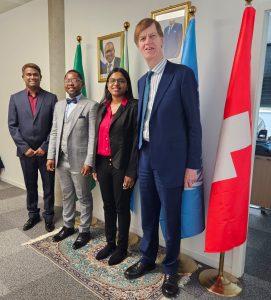
When we met the missions, core group, OHCHR and OSLAP we stressed the importance of the resolution text “….. to advocate for victims and survivors, and to support relevant judicial and other proceedings…. ” to be actioned by the OHCHR.
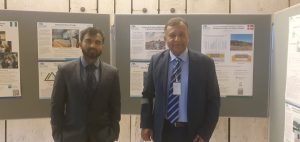
BTF delegation met with a number of Special Mandate Holders and shared some important documents that are not limited to but including the current conflict in Kurunthurmalai and Vedukkunarimalai historical Hindu sacred places of worship.
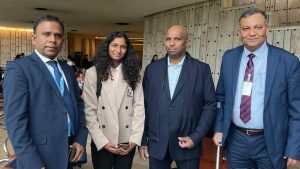
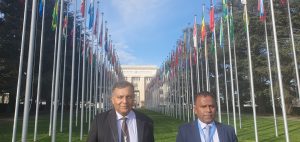
BTF was joined by The Rt Hon The Lord John Mann (Vice Chair of APPG for Tamils) and The Rt Hon Sir Stephen Timms MP (Vice Chair of APPG for Tamils) at the United Nations Human Rights Council’s 55th Session. The delegations we met with were pleased to see both dignitaries from the UK as the UK is the pen holder on Sri Lanka.
The BTF delegation highlighted the importance of utilising the evidence collected by SLAP with Member States and discussed future international criminal prosecution avenues and the potential roles of member states can play in future accountability processes.
As the Victims-Community is vulnerable to the dangers of memory loss, death, and the destruction of evidence, there is a need for the Tamil people to take rapid steps to prove the acts of genocide.
This necessitates that a mechanism is required for the maximum use of providing a route here.
As BTF and sister organisations were instrumental in bringing many strong mandates in the operative paragraphs, we are dutybound to engage with the relevant stakeholders for the full implementation of the mandates in particular the operative paragraph 8 and to carry forward the outcome to the next level in the new resolution in September 2024 to trigger a process leading to the establishment of an international criminal justice mechanism and finding a political solution addressing the legitimate aspirations of Tamils as a necessary requirement to ensure the non-recurrence of the cycle of violence in Sri Lanka.
The report of the Secretary General’s internal review panel on United Nations action in Sri Lanka by Charles Petrie criticized U.N. member states for not calling a single formal meeting of the Security Council, the Human Rights Council or the 193-nation General Assembly during the final months of the Sri Lanka conflict. The Security Council did not issue a press statement until three days before the end of the conflict. Had the international community intervened and taken the necessary timely actions Sri Lanka wouldn’t have plunged to this level of economic crisis or in its human rights records. Had that occurred, such actions could have become a deterrence for other countries not to repeat Sri Lanka’s model and the world would be more peaceful than what it is now.
BTF engagements with member states, UNHRC & stakeholders running up to September 2024 new resolution
Videos available at:
Photos available at:
55th United Nations Human Rights Council Session (UNHRC). – British Tamils Forum

Comments are closed.